

What is a CT Scanner.
A CT (Computed Tomography) scanner is a highly advanced imaging device that uses X-ray technology and computer processing to create detailed cross-sectional images of the body’s internal structures. Unlike traditional X-rays, which provide a single flat image, a CT scan captures multiple images from different angles, allowing for a more precise and comprehensive view of organs, bones, blood vessels, and soft tissues.
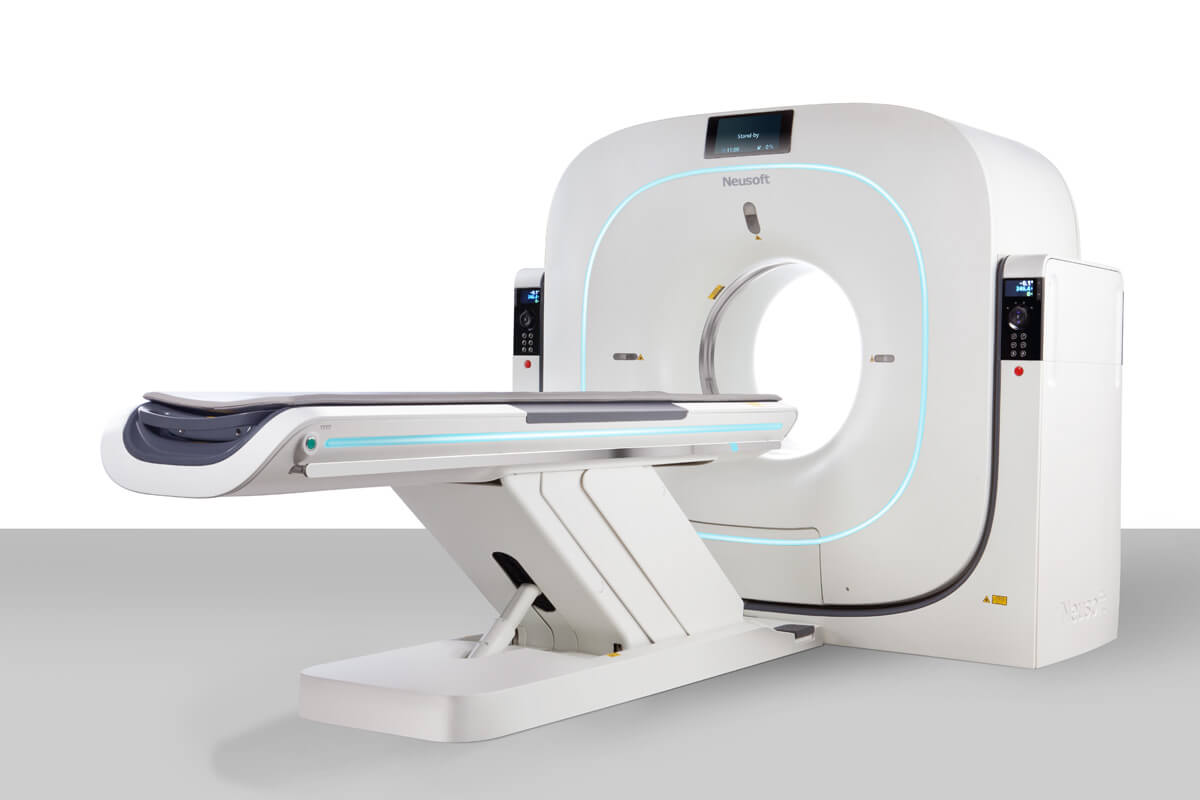
At Medscan, we use the latest Neuviz 64e PRO CT scanner that can deliver high-definition imaging with a radiation exposure up to 80% less, offering safer and more precise diagnoses. CT scans are now widely used in diagnosing nearly all conditions from injuries and infections to serious diseases, enabling healthcare professionals to make informed decisions on treatment.
Safety.
CT (Computed Tomography) scanners contain advanced safety features that minimize radiation exposure but provide highly detailed medical images. Present CT technology has come a long way, utilizing low-dose scanning techniques, decreased imaging times, and automated dose optimization to enhance patient safety.
Among the most advanced models, the Neuviz 64e PRO CT scanner stands out with innovative radiation dose reduction technology, cutting exposure by up to 80% without compromising image quality. It is therefore ideal for straightforward and complex diagnostic examinations. In addition, its quick scanning enables patients to spend less time within the machine, further enhancing comfort and safety.
Lead shielding is also applied in CT scanners as and when needed and follows rigorous international standards to ensure safety while providing each scan with the least amount of radiation dose possible. With continuing advancements in medical imaging, advanced CT scanners like the Neuviz 64e PRO facilitate faster, safer, and more precise diagnosis, allowing healthcare professionals to make informed treatment decisions with patient welfare top priority.
Preparation for Your CT Scan.
What to Expect.
Before your CT Scan
- You may be told not to eat or drink anything for a few hours beforehand, especially if contrast dye is to be used.
- If contrast dye is being used, you may need to inform your doctor about allergies, kidney disease, or any other medical condition.
- Wear loose-fitting, comfortable clothing that has no metal buttons, zippers, or accessories. Sometimes you‘ll need to change clothing and wear a hospital gown.
- Remove metal objects such as watches, jewelry, hearing aids, dentures, and glasses, as they will interfere with the scan.
- Inform your radiologist in case you are pregnant, have pacemakers or implants, or any other medical condition that may affect the scan.
The Scan
- You will lie on a moving table, which is pushed through the CT scanner while it obtains a number of pictures of the part being scanned.
- If contrast dye is required, it may be administered orally, intravenously, or through an enema, depending on the type of scan.
- The process is quick and painless, typically lasting only a few minutes, with the full appointment taking about 15-20 minutes.
- You may be asked to hold your breath briefly to avoid motion blur and ensure clear images.
After the Scan
- If you have been administered contrast dye, you may be instructed to drink a lot of water to flush it out of your system.
- You can normally go back to regular activities immediately, unless otherwise instructed by your physician.
- Your examination will be interpreted by a radiologist and a report will be forwarded to your physician for review.

 English
  Greek
Greek